• 300 S. Firestone Street, Suite 200-C Gastonia, NC 28052
  • 400 E. King Street, Kings Mountain, NC 28086

Category Archives: Industry Insight

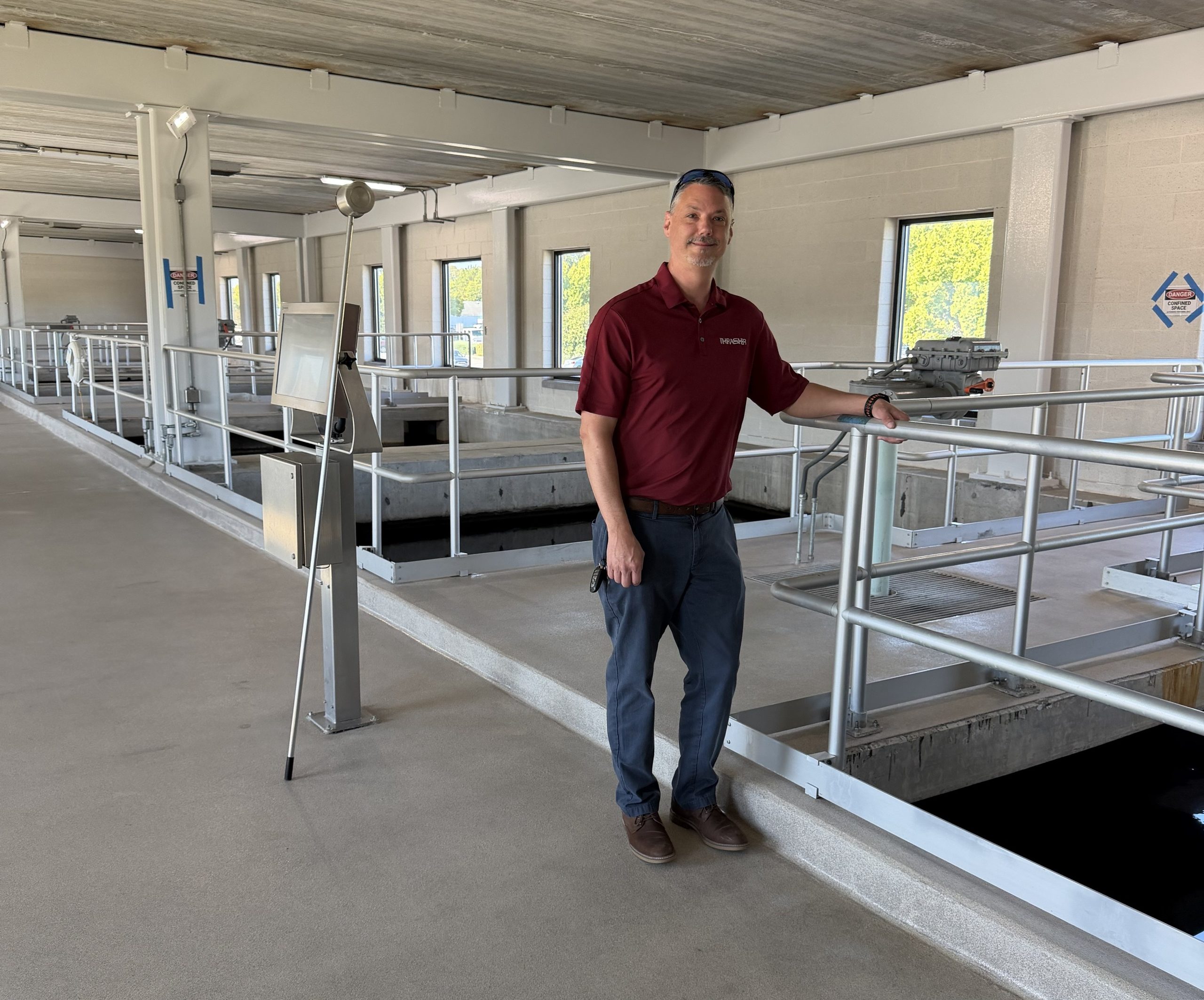
The Thrasher Group NC’s Rusty Campbell, Water Resources Division: From the Lab to Leadership

Rusty Campbell has spent 30 years in the water resources industry — 27 of them on the public utility side, starting out as a lab chemist, before working his way through operations and into leadership.

That hands-on foundation shapes everything he does today as head of The Thrasher Group North Carolina’s Water Resources division.

We sat down with Rusty to talk about the four key values that guide his team’s work, the stories behind them, and how his background with municipal utilities and NCDEQ informs the way Thrasher NC serves its clients.

Engineered for Compliance

You say you want The Thrasher Group NC to be known for its “engineered for compliance” approach. Can you tell us about a time when that really mattered?

“Regulatory compliance is where a lot of our work starts, and the EPA’s Lead and Copper Rule (which is designed to protect drinking water from lead and copper that leach from pipes, solder, fixtures and services lines) is a good example of just how demanding that can be. Every water system has to remove lead service lines from their systems within 10 years, which means evaluating all piping material in the system. That’s a massive undertaking — you can conduct a predictive model, and you need field crews out there doing service line inventories, finding the people who can actually go do that work, and making sense of what’s buried in the ground.”

“As regulations change, water engineering firms have to be prepared to help their customers adapt. The new PFAS regulatory timeline is another good example. It’s expensive to get into compliance, and there’s still a lot of unknowns out there about where EPA regulation is headed in the future. A good engineering firm can help navigate this with a client and engineer water systems with regulations in mind from the start. Thrasher continues to stay up to date with the regulatory changes and nuances so we can best advise our clients and maximize their funding while meeting regulatory requirements.”

“It means we take every single precaution and step to avoid making errors — and every step is done thoroughly, start to finish. One example of how that shows up practically is how we handle NCDEQ reviews. Once a design reaches the 60% or 90% stage, we’ll send it to NCDEQ for a cursory review before it ever goes into the formal review process.”

Tell us more about PFAS removal and how that will impact the water engineering work in North Carolina.

“PFAS removal comes down to a few different technology paths — physical barriers, ion exchange, GAC, and other methods being researched  — and utilities often need an engineering partner to help figure out which one will work best for the unique water system. Thrasher NC is talking with a partner that offers physical barrier systems, and we could help design the system to fit into an existing plant,  engineered so it can be installed and approved to plug into a system to help them meet the stringent regulatory requirements. That’s the kind of problem-solving compliance work is really about — not just meeting the letter of the regulation, but making the solution fit the real, physical plant you’re working with.”

Responsiveness matters a lot for compliance. Any recent examples?

“We had a client email us on June 30th, the last day of their fiscal year with an urgent documentation request. We had everything they needed together and sent it back to them that same morning — start to finish, in less than an hour. Getting this information to the client in a timely manner can be the difference between them securing or not securing a loan or funding for a water or wastewater project.”

Designed for Performance

“Designed for performance” is the second value on your list. What does that mean in practice, and can you give an example?

One story Rusty points to involved a wastewater treatment plant in NC. Thrasher NC connected with the utility at the NC Main Street Conference, where a small photo of one of Thrasher NC’s water basin designs caught their attention.

“The plant was dealing with disruptions during high-flow events — heavy rain would hit the system and throw off internal operations enough to cause frequent NOVs (notices of violation) from the State of North Carolina’s Department of Environmental Quality (NCDEQ). We toured the plant extensively, talked with the wastewater superintendent and operators, and worked through ideas together for a temporary, interim solution to keep the notices at bay while the long-term fix can be designed and constructed.

A long-term answer may be EQ basin space — equalization basin capacity that lets the plant absorb those high-flow events instead of getting knocked off balance by them. Our job will be to help them go after the funding, create the design, handle the permitting, and manage construction administration and everything in between to get there.”

“It’s a multi-year project, and funding timing doesn’t always cooperate — you plan around fall or spring funding cycles and sometimes there’s a delay. But that’s the performance piece: designing a long-term solution that actually solves the root cause and doing so within the confines of regulating agencies and funding opportunities.”

“But that’s the performance piece: designing a long-term solution that actually solves the root cause.”

Built for North Carolina

What does “Built for North Carolina” mean to you? Is that specifically about NCDEQ approval, or something broader?

“It starts with understanding how NCDEQ operates. EPA sets the baseline rules and NCDEQ holds primacy for enforcing it in North Carolina. So being built for North Carolina means we design and engineer with NCDEQ’s specific standards and review process in mind from day one — not retrofitting a generic approach after the fact.”

“That’s really where my background comes in. I spent 30 years in this industry in North Carolina, 27 of those on the public utility side, starting in the lab and working through operations. I know what it’s like to sit on the other side of the table as a utility, and I’ve built relationships with NCDEQ over decades. Understanding both sides of that relationship is what lets us build projects that fit North Carolina’s regulatory environment, not a more generic standard.”

Done Right the First Time

What does “done right the first time” mean to you, and what does it mean for your customers?

“It means we take every single precaution and step to avoid making errors — and every step is done thoroughly, start to finish. One example of how that shows up practically is in how we handle NCDEQ reviews. Once a design reaches the 60% or 90% stage, we’ll send it to NCDEQ for a cursory review before it ever goes into the formal review process. That’s not something required though NCDEQ is kind enough to assist with that as part of our process, but it’s an extra step that can save both time and money in the long run.”

“That cursory step lets us catch and mitigate issues before they become official comments — things we can often address in a very short time — whether a linear project has enough air releases or other appurtenances , whether the geotech and compaction rates are correct, and so many other things that can be caught early. Of course this isn’t a full review, but they’re picking out the things that can be addressed quickly. It also means we’re not paying a permitting or review fee for that early look, and more importantly, we’re not adding 15 to 30 days to the schedule by discovering the same comments and dealing with changes later in a full formal review.”

Can you tell us about a “done right the first time” moment — something that could have gone sideways, or have been much more complicated, without your expertise?

Before joining The Thrasher Group North Carolina, Rusty spent years on the utility side, including at a NC municipality outside of Charlotte.

“When I first started, we faced a notice of violation. Instead of spending capital to hire an outside engineering firm to fix it, we were able to solve the issue with some simple operational adjustments at the plant. That kind of hands-on, plant-optimization mindset is a differentiator for our team now — we’re not just designing on paper, we understand what’s happening at the plant level.”

Thanks Rusty! In Closing?
“From source water to tap water to wastewater, I’ve been heavily involved in it all and we understand what it takes to get the job done right,” he says. “And that’s exactly the perspective we bring to every project.”


Ready to talk to The Thrasher Group NC about your next water systems or wastewater project(s)? Contact Us

Rusty Campbell
rcampbell@thethrashergroupnc.com
(704) 864-2201

Rebuilding Stronger: Water Pump Station Engineering for NC Communities 

After Hurricane Helene, municipalities across Western North Carolina are replacing and upgrading critical water infrastructure. The Thrasher Group NC is here to help — from design through funding navigation. 

As recovery continues across the region, communities are seizing this moment to replace aging pump stations with infrastructure built for decades of future demand. The Thrasher Group North Carolina partners with towns and utilities to make that vision a reality. 

The Need: Hurricane Helene Accelerated an Already Critical Infrastructure Gap 

Hurricane Helene’s impact on Western North Carolina exposed the fragility of aging utility systems — particularly water distribution infrastructure. For many communities, aging pump stations were already approaching the end of their service life. The storm made replacement not just a priority, but an urgency. 

Municipal water pump stations are the backbone of reliable water service. When they fail or underperform, communities face reduced fire suppression capacity, inadequate pressure for growth, and costly emergency repairs. Proactive replacement — engineered to current standards and future demands — is the only sustainable path forward.

Our Approach: Community-Centered Infrastructure Engineering 

Thrasher doesn’t approach infrastructure projects as interchangeable contracts. Every town has distinct operational priorities, growth trajectories, and budget realities — and our engineering process begins by deeply understanding yours. 

For pump station projects, this means collaborating closely with your operations staff, aligning designs with your system’s long-range plan, and anticipating the regulatory and funding requirements you’ll need to satisfy. The result is infrastructure that works on day one and scales with your community for years to come. 

Why Funding Expertise Matters After a Disaster 

Recovery funding — whether from FEMA’s Public Assistance program, Community Development Block Grant Disaster Recovery (CDBG-DR), or state revolving funds — comes with extensive compliance requirements, documentation burdens, and administrative timelines that can derail projects if not managed carefully. 

Thrasher has years of experience guiding clients through these mechanisms. We understand how to structure scopes of work, prepare cost justifications, and coordinate with program administrators to keep projects strategically positioned for reimbursement and approval. For communities operating in post-disaster environments, this expertise isn’t optional — it’s essential.

Recovery funding involves highly complex regulatory and administrative processes. Thrasher excels at guiding clients through these processes to ensure projects remain compliant and strategically positioned for success. 

The Right Firm for Your Project

Pump station replacement projects sit at an important intersection: technically demanding enough to require specialized expertise, but specific enough in scope to deserve hands-on attention rather than being absorbed into a large firm’s project backlog. 

Thrasher is ideally suited to this scale. Our team brings deep technical capability in water system engineering, while our size means your project receives dedicated focus — not just an assigned project manager, but a committed team invested in your community’s outcome. We are properly registered in the State of North Carolina to perform this work, with professional qualifications updated to reflect our current team, certifications, and project experience.

Committed to Western North Carolina 

Our proximity to communities across the region is more than a logistical advantage — it reflects a genuine commitment to the people and places we serve. Decades of work alongside North Carolina municipalities have given us relationships, regional knowledge, and institutional understanding that national firms simply can’t replicate. 

When your water system needs to be right — for your residents, your operators, and your long-term fiscal health — Thrasher brings both the technical capability and the community dedication to deliver.

Let’s Talk About Your Infrastructure Project 

Whether you’re planning a pump station replacement, navigating disaster recovery funding, or building a long-range capital plan — Thrasher is ready to help. 


How Thrasher NC Can Help:

⚙️ Pump Station Design & Replacement Full-service engineering for new and replacement water pump stations — sized and specified for your system’s current and future needs. 

💧 Water System Capacity Planning Hydraulic modeling and master planning to ensure your system can meet growth demands and regulatory requirements. 

📋 Disaster Recovery & FEMA Compliance Experienced guidance through FEMA, CDBG-DR, and state recovery funding programs — keeping your project compliant and on track. 

🏛️ Grant & Funding Navigation Local, state, and federal funding mechanisms are complex. Thrasher helps clients identify, apply for, and administer the right funding sources.


PFAS Compliance Guide for North Carolina Municipalities

PFAS, known as “forever chemicals,” can be harmful to our drinking water. Regular water monitoring protects public health and ensures PFAS compliance.

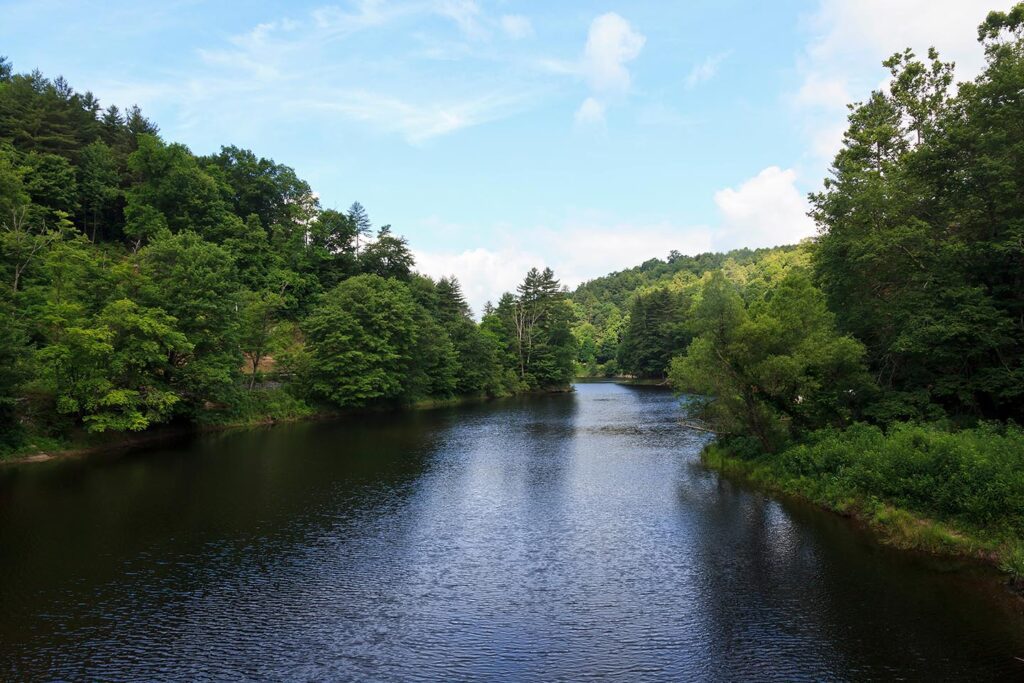
Protecting water sources, like rivers, are vital to PFAS compliance.

What Are PFAS?

PFAS (per- and polyfluoroalkyl substances) — including PFOA, PFOS, and GenX — are persistent chemicals found in industrial and consumer products such as firefighting foam, water repellent items, and cookware. Released into the environment, they accumulate in rivers, lakes, and groundwater, posing serious health risks — making PFAS compliance an important topic for our communities.

Are PFAS Harmful To Humans?

PFAS, known as “forever chemicals,” do not break down easily and build up, or bioaccumulate, in the environment and human body. Scientists have identified ingestion through drinking water as the primary pathway for exposure in humans. PFAS have been linked to liver and kidney damage, hormone disruption, reproductive issues, and certain cancers.

Understanding “Forever Chemicals” in North Carolina

1980s: PFAS have been present in NC since the 1980s, largely due to industrial discharge into waterways such as the Cape Fear, Catawba, and Broad Rivers — the drinking water source for tens of thousands of North Carolinians.

2017: Public concern rises after GenX was detected in the Cape Fear River.

2024 (April): EPA finalizes national standards for 6 PFAS compounds in drinking water (PFOA, PFOS, PFNA, PFHxS, PFBS, HFPO-DA), giving public water systems 5 years to comply.

2024: An EWG analysis finds that the drinking water for at least 2.5 million North Carolinians exceeds the just-finalized federal limits.

2025: The NC DEQ states its intent to draft a rule requiring industrial dischargers and POTWs to monitor and report on levels for 3 PFAS chemicals — PFOA, PFOS, and GenX — to attempt to reduce discharge at the source and lower the burden on residents and municipalities.

2029: All public water systems must be in compliance with the EPA’s new national standards, the PFAS maximum contaminant levels (MCLs).

Move Towards Compliance – Conducting a PFAS Pilot Study

Thrasher’s team of water resources experts is up-to-date on the latest developments in the industry, from regulations to water treatment solutions.

Our water resource engineers recommend that municipalities take the following steps and use a pilot study to determine the best path forward for PFAS compliance. Our team has vetted suppliers and is already working with them to complete these studies and can help manage the process from start to finish.

Step 1: Source Water Identification

  • Identify primary intakes: rivers, lakes, wells

Step 2: Test Source Water

  • Measure water quality to determine direction for Pilot Study

Step 3: Results Interpretations

  • Compare to Federal MCLs
  • Assess Hazard Index for mixed PFAS Chemicals

Step 4: Conduct A Pilot Study

  • Understand the type of material or resin treatment options available
    • Granulated Activated Carbon
    • Ion Exchange
    • Reverse Osmosis
  • Conduct study to verify which treatment options
    are most effective at eliminating unwanted material

Step 5: Existing Treatment Process Update

  • Based on results, design necessary upgrades to existing facilities to remove PFAS chemicals from drinking water source
  • Perform the changes to the water treatment process, including updating filters, new resin treatments, and any other retrofitted specialized equipment

Water Treatment

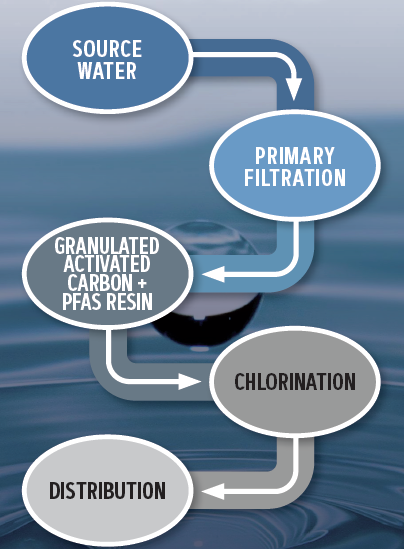
Pilot testing ensures selection of the most effective treatment. Upgrades may include retrofitting existing treatment or expansion with new treatment. Regular monitoring protects public health and ensures PFAS compliance.

Water Treatment Diagram for PFAS Compliance

Have Questions? Thrasher NC Can Help.

Our experienced utilities engineers can help navigate you water system needs. Contact us whenever you have questions.

Building What’s Missing: Why Leasable Light-Industrial Spaces In North Carolina Deserve a Closer Look

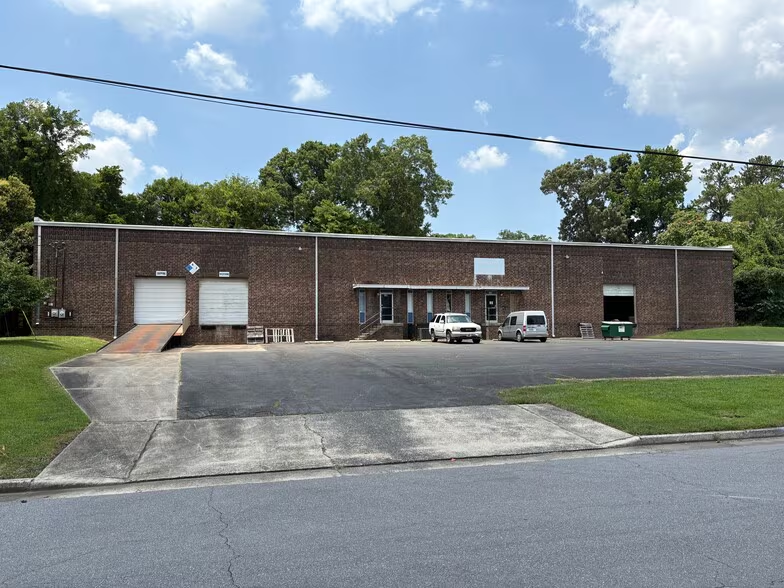
Source: Park Commercial Real Estate

by Larissa M. Coles, PE, Senior Project Manager & Structural Engineer

From the Triad to the Triangle and into the mountains, North Carolina communities are in need of more leasable light-industrial space. Despite strong fundamentals—quick lease-up, long-term tenants, and stable income—developers continue to pass on light-industrial leasable spaces in favor of big-box and massive warehouse builds. This isn’t surprising considering big-box projects are overall simpler to manage and deliver higher margins at scale. 

But small-bay light-industrial spaces are needed for the everyday businesses that keep our local economies running. These are HVAC contractors, machine shops, service providers and logistics firms that need practical, functional space—typically with a small office and a warehouse area, plus good access and turnaround space.

At The Thrasher Group NC, we believe in supporting developers in investing in the kind of industrial space our NC communities need.

Background: Current State of the Market

Chances are, you’ve already heard rumblings about this need. But just in case, here are a few quotes and stats that set the stage.  Small-bay industrial properties in some Charlotte suburbs have availability rates below 2%, showcasing the need for light industrial spaces around Charlotte. Local commercial brokers across the state echo the challenge. In Asheville, “as soon as they build [flex-industrial space], they fill it up… clients are looking for small office/warehouse space with dock-door access, and it just doesn’t exist.” And in Durham, “this segment has been woefully underserved for the past 20 years.”

Why Light-Industrial Projects Get Sidelined

So why aren’t more small-bay projects being built? For one, they’re harder to scale. A 500,000-square-foot warehouse on the edge of town is easier to finance and simpler to plan. Smaller, multi-tenant industrial builds can face tougher zoning restrictions, more infrastructure constraints, and higher per-foot costs for utilities, road improvements and stormwater controls. Finding affordable land that’s close to major roads for easy delivery and shipments is another challenge. 

They also tend to lack the visibility and appeal of big-box tenants that lenders are used to seeing. Compared to massive distribution centers or shovel-ready residential tracts, light industrial can feel like a logistical headache with limited upside.

But that doesn’t mean they’re not worth doing. It means they need the right development strategy—and the right support team to move them forward. 

Rethinking Small-Bay Light Industrial

Dig a little deeper, and there’s opportunity in the challenge. Small-bay space tends to lease fast, retain tenants longer and provide steady rental income. Land development and site engineering firms can play a role in making these projects easier to pursue. Here are a few ways they can make an impact: 

1. Lowering the risk before developer commits

Land development firms can reduce uncertainty by providing thorough sketch plan analysis before a developer commits to a site. That includes evaluating topography, soil conditions, utility availability, stormwater constraints and access limitations. Identifying these challenges early allows developers to either move forward with confidence or adjust plans before costs stack up. It also helps avoid sunk costs in unbuildable or overly complex sites.

2. Optimizing site layout for industrial functionality

Efficient site planning is critical to making small-bay industrial viable. Land development teams can design layouts that balance usable square footage with circulation, setbacks, and stormwater needs—maximizing buildable area without triggering unnecessary permitting complexity. By tailoring designs to fit the geometry and grading of the site, these firms help developers make the most of their land while keeping costs in check.

3. Navigating zoning and permitting with local expertise

One major obstacle for light-industrial projects is navigating municipal requirements. Land development firms fluent in local codes can coordinate rezonings, variances, and special-use permits. They also prepare and submit site plans, manage technical reviews, and maintain communication with planning departments. That coordination is often the difference between a stalled project and one that moves forward on schedule. To me, the most important thing for success on a project is communication. We’re just one piece of the puzzle, but an important one, so keeping in contact with the owner, architect, contractor and other engineers is vital to ensure the best product possible. 

4. Managing stormwater and grading to control construction costs

Stormwater management and grading can make or break a budget—especially on tight and steeply sloped sites. Land development services include drainage design, erosion control planning, and grading plans that minimize cut/fill and reduce the need for retaining walls or underground stormwater solutions. These cost-saving strategies are critical to keeping small-bay industrial projects financially viable.

5. Coordinating access and utility approvals with agencies

Small-scale industrial projects often face delays when access points or utility connections aren’t clearly coordinated. Land development firms handle coordination with DOT for driveways and turn lanes, as well as with utility providers to ensure service availability and capacity. When these approvals are baked into the site design process from the start, developers avoid late-stage surprises that can derail project timelines.

At Thrasher NC, we can help bring small-bay and flex-industrial projects to life by focusing on feasibility first. That means analyzing topography, utilities, stormwater constraints and entitlement pathways before pouring resources into full design. We understand how to make these buildings functional—for tenants, for municipalities, and for long-term owners. 

Building with the right expertise turns challenges into opportunities.

If we foresee any major challenges that might make the project less desirable to take on, we’ll say so. But more often than not, the right layout, permitting strategy, or infrastructure solution is what turns a “maybe” site into a viable asset. Developing small-bay industrial spaces may not be flashy—but it fills a real need in North Carolina’s economy. 

For more info, contact us.